

SiloConnect

The cement industry has modernized quickly. Production monitoring and process automation: most of it is now digitalized. But one part of the supply chain hasn't kept up... and it's logistics.
For cement suppliers, silo management and delivery planning are still largely manual. The result is predictable: inefficient deliveries, morning rush peaks, and rising operational costs.
Cement production is highly automated, but logistics is staying manual. Most operations still run on Excel, phone calls, and driver experience. The least digitized part of the chain is cement distribution, specifically from the cement plant to the RMX plant. The consequences are predictable:
Planning efficiency is no longer optional.
Source: Nanolike
The issue isn't technology, it's structure. Replenishment workflows were built around manual silo checks and phone-based ordering. This legacy model makes it almost impossible to anticipate demand or smooth deliveries.
For a logistics director managing dozens of sites across several regions, it creates constant friction between logistics and sales, and between what was planned and what happens on the ground.
And the pressure is growing. In large European markets, driver shortages are reaching critical levels: by 2026, the EU expects a shortfall of nearly 2 million drivers (IRU, 2023). In that context, every wasted trip and every last-minute emergency delivery becomes a compounding problem.
Without 24/7 data on what's inside each silo, there's no basis for anticipation. Only reaction.
Automated replenishment replaces the reactive model with a proactive one. Instead of waiting for a customer to call, logistics teams receive automatic alerts when a silo approaches a critical threshold, before the stockout happens.
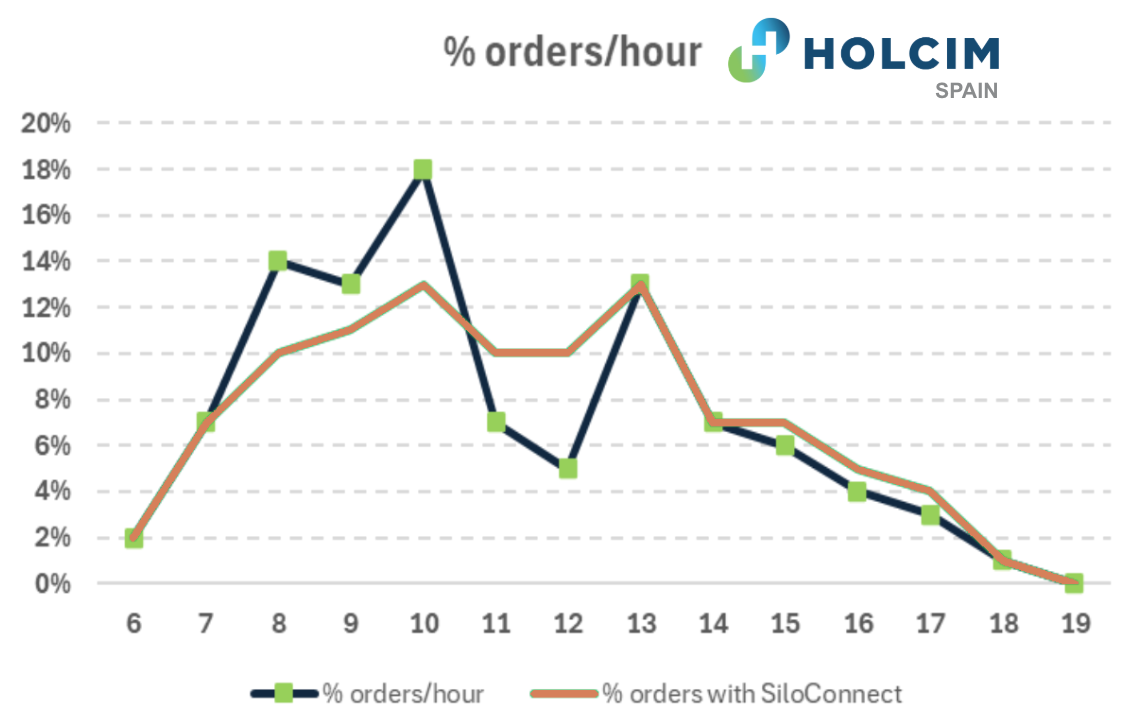
The impact is measurable. Data from Nanolike deployments shows that before connected silo monitoring, 34% of deliveries were concentrated before 9 am, with the afternoon window (3 pm to 6 pm) accounting for just 9% of daily volume. After deployment, the morning peak dropped to 28% while afternoon deliveries rose to 21%.
For dispatch teams, this means better driver utilization, fewer scheduling conflicts, and less pressure on the morning rush. For commercial teams, it means customers receive proactive service rather than last-minute apologies and are more likely to remain loyal.
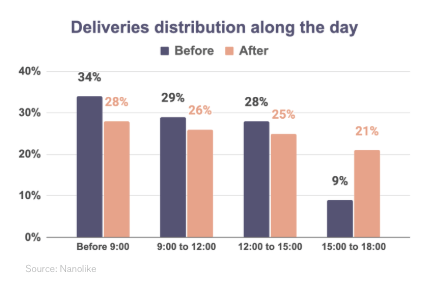
Across Europe and Latin America, Holcim has deployed SiloConnect to improve its cement logistics. The results are concrete.
Holcim Spain experienced a delivery peak between 7 am and 3 pm, overloading dispatch teams and leaving afternoon capacity unused. By connecting customer silos and automating replenishment alerts, the company spread deliveries more evenly across the day. Last-minute changes dropped and fleet utilization improved.
Holcim France automated replenishment orders entirely for part of its customer base. Dispatch teams that once spent hours chasing silo levels now manage by exception.
Holcim Mexico turned visibility into profitability. After a national rollout, it cut transport cost per ton by 11% and delivery waiting times by 51%.
"From the start, we had clear goals for transforming our logistics, and SiloConnect exceeded our expectations. By following each step closely, we saw concrete gains in efficiency, cost savings, and smoother processes. This solution changed the way we work, with visible results in Mexico and across the region."
Roberto Velazquez, LATAM Logistics Productivity and Digital Processes Manager at Holcim Mexico
→ See how Holcim transformed its logistics operations with SiloConnect
Connected silo monitoring and automated replenishment alerts are no longer experimental. They're operational, proven at scale by some of the largest cement groups in the world.
The question for logistics directors isn't whether to digitalize. It's how long their organization can afford to wait.
FAQ (People Also Ask):
.png?width=2600&height=1200&name=AI%20in%20cement%20logistics%20(1).png)